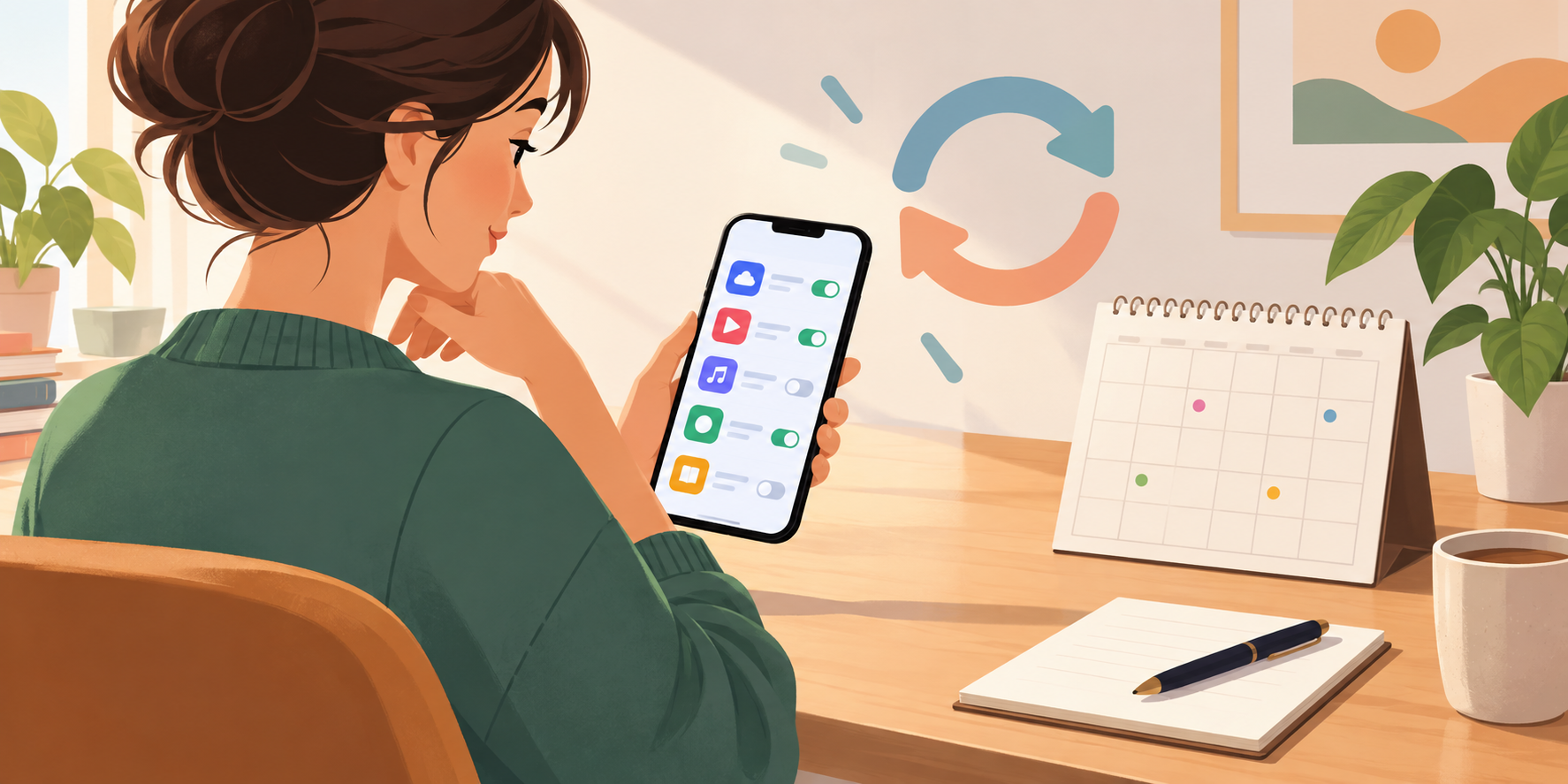
A digital purchase can be a one-off payment, a subscription, or an ongoing cost for extra features or in-game items. If the payment happens automatically, it can be easy to forget which service is being paid for, when the next charge is due, or which account controls the renewal.
A subscription check is not about declaring every service good or bad. It is a short inventory that lets the people paying decide whether each service still fits their priorities and budget.
Make a simple subscription list
For each service, record its name, who uses it, the current price, how often it is charged, the next renewal date if known, and where the cancellation instructions are. Check the provider’s account page and recent bank or card statements. Use the actual charge interval: weekly, monthly, annually, or another term.
To make costs easier to compare, convert them to one period. If a service costs $12 every month, twelve monthly charges would total $144 over a year if the price stays the same and the subscription remains active. Treat this as arithmetic, not a prediction: providers can change terms or prices, so check the current details.
Know who controls the payment
A direct debit is approved by you but set up and controlled by the business being paid; its amount may vary. An automatic payment is set up and controlled by you and is usually the same amount each time. Some digital services instead charge a saved card or use an app-store account. These routes are not interchangeable. The Consumer Protection guide to direct debits and automatic payments explains the difference and how to change or cancel an automatic payment.
Read the cancellation terms before acting
Find out which company or platform manages the subscription and follow its stated cancellation steps. Save a confirmation or copy of your message. Stopping a payment instruction at the bank may not, by itself, end a separate service contract. Consumer Protection advises checking contract terms and sending cancellation notice in a way that can be kept as a record.
For digital products, New Zealand’s Consumer Protection guidance says buyers have Fair Trading Act protections, including protection from unfair contract terms. Its streaming and downloads guide recommends checking subscription cancellation processes and how charges work. If a learner is under the account holder’s care, do the check with the adult who controls the account.
Choose one next step
For each service, choose keep, review, or cancel after checking who uses it and what the terms say. If you cancel, verify the end date and watch for the confirmation. If you keep it, add a reminder before the next renewal. In MoneyCQ, this kind of recurring-cost check shows how a small regular choice can occupy future room in a plan.
FAQs
Is a subscription the same as a one-off digital purchase?
No. A subscription can charge repeatedly over an agreed period, while a one-off purchase is charged once. Check the terms for the product you use.
Are direct debits and automatic payments the same?
No. A direct debit is controlled by the business you approved, while an automatic payment is set up and controlled by you. The amount rules can differ.
Does cancelling a bank payment always cancel the subscription?
Not necessarily. Follow the provider’s cancellation process and check the service contract as well as the payment route.
What details should go in a subscription audit?
Record the service, user, cost, charge interval, next renewal date if known, payment route and cancellation instructions.
What proof should I keep after cancelling?
Keep the provider’s confirmation or a copy of your cancellation notice, and note the stated end date.
What if I do not recognise a digital charge?
Check the account and household users, then contact the platform or payment provider through its official support channel if it remains unclear.
Leave a Reply