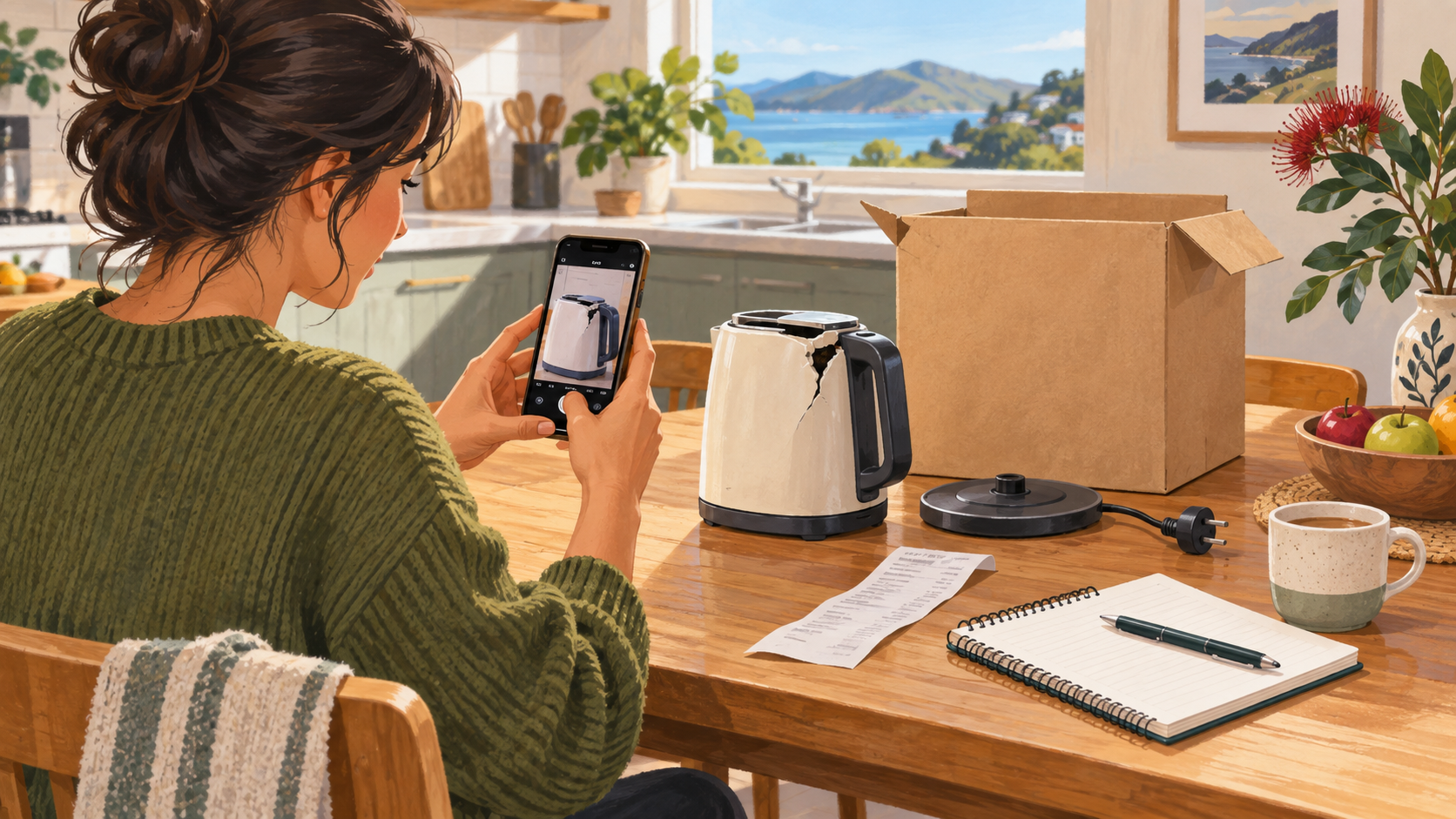
When something you bought stops working, a clear record can make the next conversation easier. You do not need an angry message or a long story. Start with what you bought, when you bought it, what went wrong, what you have already tried and what outcome you are asking for.
Check whether the Consumer Guarantees Act may apply
Consumer Protection says the Consumer Guarantees Act (CGA) applies to products and services bought from businesses trading in New Zealand for personal or household use, including online purchases. Products should be of acceptable quality, fit for purpose and match their description. The CGA generally does not apply to private sales, a change of mind or damage caused by misuse or alteration.
Read the official Consumer Guarantees Act guide and its Consumer Rights Finder for the situation. This article is general information, not a legal opinion. The right remedy depends on the product, the problem and how serious the failure is.
Make an evidence pack
- Save the receipt, order confirmation or other proof of purchase.
- Take clear photos of damage, the product and its packaging before sending anything back.
- Write down the date the problem appeared and what the product was being used for.
- Keep the listing, product description, warranty information and any messages with the seller.
- Note the remedy you are requesting: repair, replacement, refund or another appropriate outcome.
Consumer Protection suggests photographing damaged packaging and says it can make a remedy discussion easier. Keep the original evidence safe and send copies unless the seller needs the item for inspection. Do not throw the product away before the issue is resolved unless it is unsafe and you have followed appropriate safety advice.
Contact the seller in a way you can track
Start with the business that sold you the product. Be factual: include the order number, purchase date, fault, evidence and the response you want. Give a reasonable opportunity to respond. If the problem is minor and can be fixed, the retailer may choose a repair, replacement or refund. If the problem is substantial or cannot be remedied within a reasonable time, different remedies may be available.
A manufacturer’s warranty is additional to CGA rights, according to Consumer Protection. An expired warranty does not automatically mean the conversation is over; a product may still need to last a reasonable time. Keep the warranty terms, but do not assume they replace the consumer guarantees.
Escalate calmly if needed
If the seller refuses to engage, keep your evidence and ask what complaint process is available. Consumer Protection points people to further resolution options, including the Disputes Tribunal for suitable matters. If a product is unsafe, stop using it and report the safety concern through the appropriate official route.
A good complaint is not about using the strongest word. It is about making the facts, evidence and requested outcome easy to understand. That gives the seller a fair chance to respond and gives you a clearer record if the issue continues.
FAQs
Does the CGA cover online purchases?
It can cover products bought online from a business trading in New Zealand for personal or household use.
What should I photograph?
Photograph the fault, the product and any damaged packaging, especially before returning or sending it for inspection.
Who should I contact first?
Start with the business that sold you the product and explain the problem and remedy you are seeking.
Does an expired warranty end my rights?
Not automatically. Consumer Protection says warranty rights are additional to CGA protections, and a product may still need to last a reasonable time.
What if the seller says the fault is minor?
If a fault is minor and can be fixed, the retailer may choose to repair, replace or refund. The correct response depends on the facts.
What if the product is unsafe?
Stop using it, keep evidence and seek appropriate safety and consumer guidance rather than continuing to test it.
Leave a Reply